
How Hospitality affects our Nervous System
The Invisible Interface
Have you ever experienced this? You open the door to your hotel room and immediately sense a subtle feeling of unease. Perhaps the ceilings feel low, the lighting is sterile, there is a faint musty smell in the air and somewhere in the background the air conditioning hums monotonously. You might not even be able to put it into words, but your body sends a clear signal: I don’t want to stay here.
What is activated in this moment is your bodily intuition. More precisely: your nervous system is communicating with you. In our modern world, we have become disconnected from these subtle signals. Even worse, we often rationalise them away: “The room is fine. I’m only here for a few nights anyway.” But our nervous system unconsciously travels with us wherever we go. Spaces are never neutral – they are constantly communicating with our biology.
The Body’s Operating System
When we talk about the communication between spaces and the body, we are referring to the autonomic nervous system. It is the invisible operating system of our body, regulating everything that happens without conscious effort: our heartbeat, breathing, digestion and stress responses. This system has two main pathways, functioning much like the accelerator and the brake of a car:
Sympathetic Nervous System is responsible for activation, performance and stress responses. Evolutionarily, it was triggered when a sabre-toothed tiger appeared outside the cave. Today, it reacts to flashing smartphones, deadlines, or even an overly bright and noisy hotel lobby. The result is a biological chain reaction: heart rate and blood pressure increase, stress hormones such as cortisol and adrenaline are released, sweat glands become activated and “non-essential” systems such as digestion and immune function are temporarily reduced.
Parasympathetic Nervous System is responsible for rest, regeneration, digestion and healing. When it is activated, our heart rate decreases. We feel safe, we relax and our cells shift into repair mode.
In today’s “always-on” culture, many people exist in a state of constant, low-level sympathetic activation. The body runs at 3,000 revolutions per minute while idling. When we then enter a hotel environment filled with harsh LED lighting, artificial materials and constant background noise, the biological brake simply cannot engage. True restoration becomes impossible.
The Sensory Switches of a Space
The idea that spaces can artificially extend or shorten our body’s stress response is no longer a matter of intuition alone. Modern research measures physiological reactions such as skin conductance, pupil dilation and brain activity (EEG). A comprehensive meta-study published in the leading journal Building and Environment (2022) makes it clear that we can activate a guest’s biological “reset button” through highly targeted sensory triggers:
-
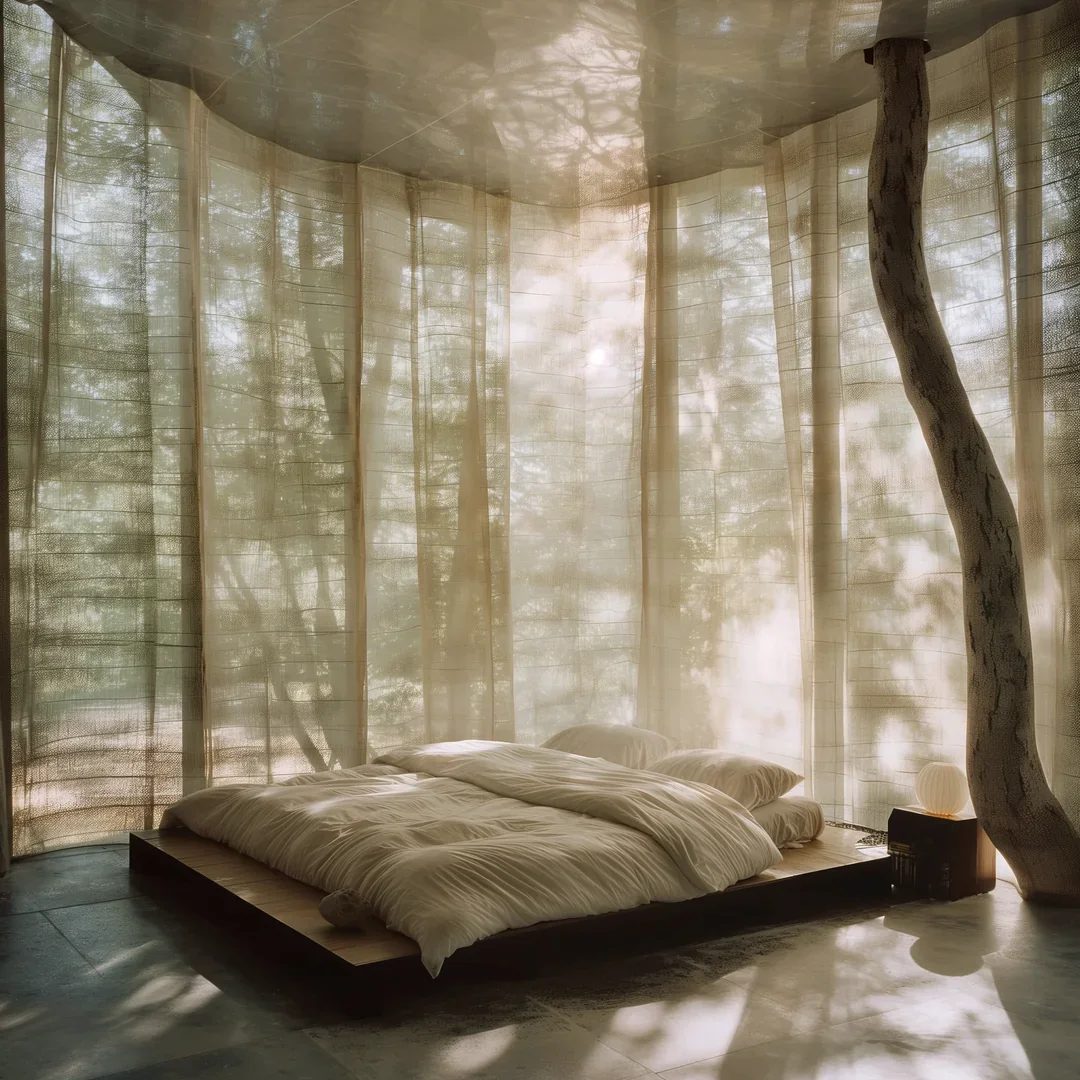
Light has profound biological effects beyond vision. It directly influences body temperature, melatonin and cortisol production and therefore our ability to transition into rest and sleep. Bright, blue-enriched light signals “activity” to the sympathetic nervous system. In contrast, dimmed, warm light supports parasympathetic activation and the body’s natural recovery processes.
-
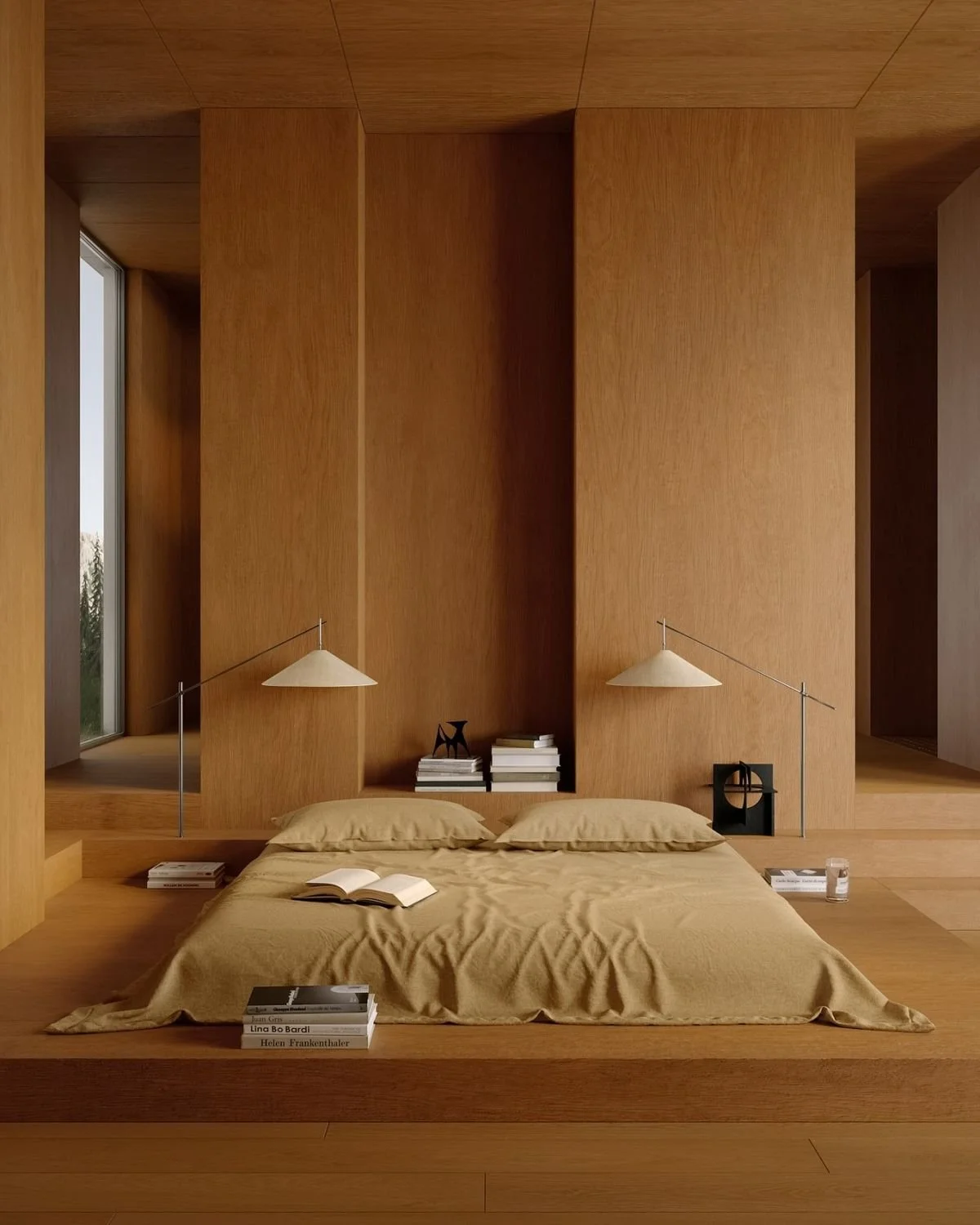
Our brains are evolutionarily designed to scan environments for safety. Simply viewing nature, organic materials such as natural wood, or certain geometric patterns (known as fractal structures) can trigger deeply rooted relaxation responses. Biophilic design can support lower stress levels and reduced blood pressure because the environment communicates a fundamental message to our nervous system: you are safe.
-
Our sense of hearing never fully switches off. Constant artificial frequencies, such as the humming of ventilation systems, can keep the nervous system in a state of subtle alertness. In contrast, restorative sounds and carefully chosen scents, such as the subtle aroma of pine or cedarwood, are directly connected to the emotional centres of our brain and can help reduce stress responses.
Neuro-Sensitive Hotel Design
A poorly designed hotel can keep guests trapped in a continuous cycle of subtle micro-stress, even while they are lying asleep in bed. A neuro-sensitive hotel environment, however, supports the body’s natural “safe mode”. Only when the nervous system receives the message “You are safe. You no longer need to stay alert” can true cellular restoration begin. Slow Hospitality is therefore not simply a clever marketing concept. It is applied biology. It is the conscious creation of spaces that work with human physiology rather than against it, giving a chronically overstimulated society something it urgently needs: The space to breathe.
Some images used in this blog were created using AI.
How My Nervous System Responds to Nature
A Lesson from Japanese Architecture
During my travels through Japan, I experienced this connection between space and the nervous system in a deeply tangible way.
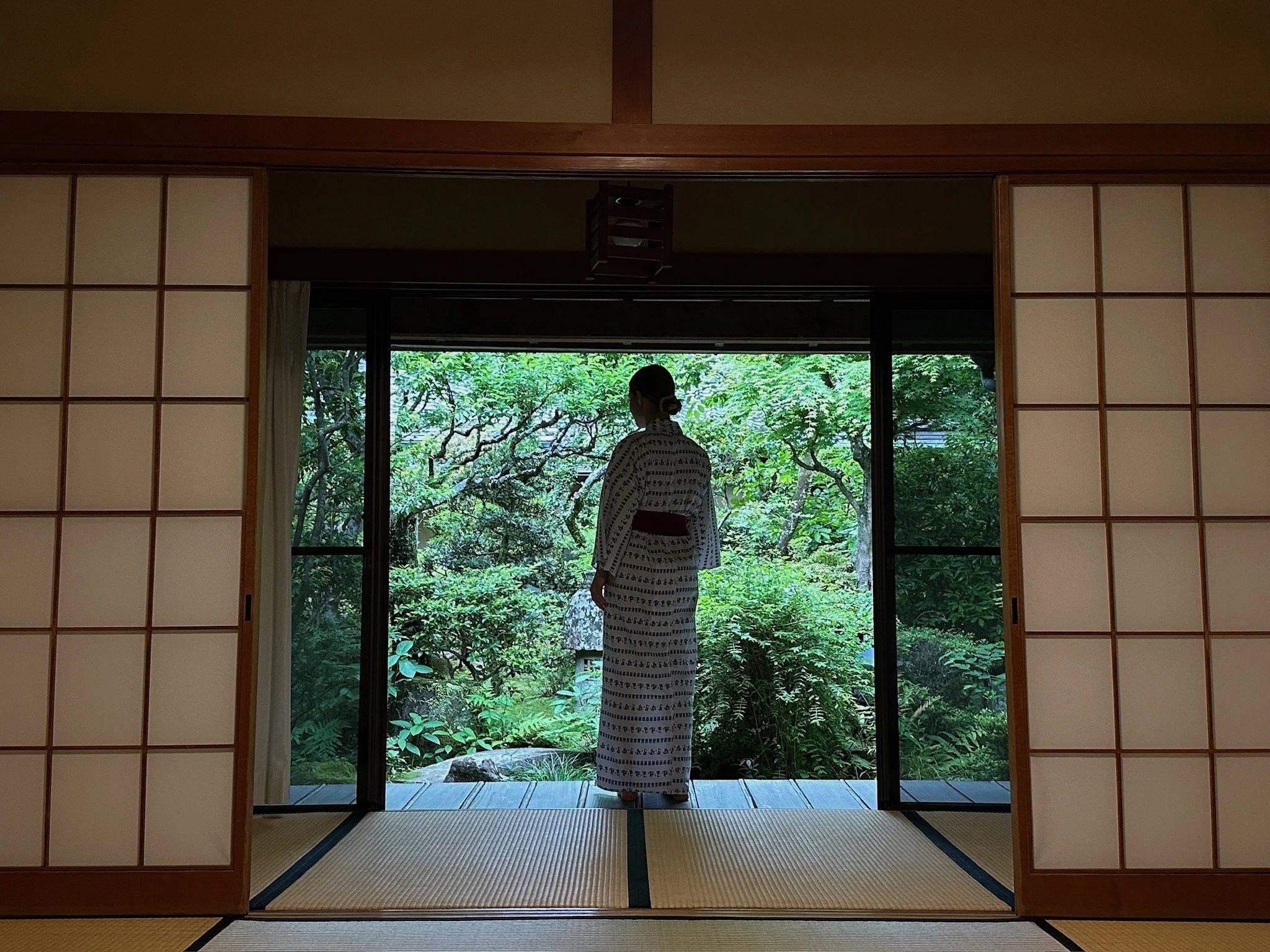
Traditional Japanese architecture has long embraced principles that are now being rediscovered through biophilic design. Many traditional homes and ryokans are organised around a central garden or courtyard, creating a continuous visual connection between interior and nature. From different rooms and everyday spaces, there is often a deliberate view towards greenery, light and changing seasons.
What fascinated me was not only the beauty of these spaces, but the physical response I noticed within myself. Being surrounded by natural elements, soft materials, quiet transitions and views of living landscapes created an immediate sense of calm. My body seemed to understand the environment before my mind could even process it.
Perhaps this is what makes certain spaces feel restorative: they communicate safety on a level deeper than aesthetics. They remind our nervous system of something ancient – that we are not separate from nature, but part of it.
